Let’s cut through the internet hype right now.
Scroll through social media, and you’ll see dramatic claims: people flipping a single nightstand into a thousand-dollar luxury statement piece, or beginners pulling in four grand a month working two hours a week. While high-end unicorn flips do happen, they are the exception, not the everyday reality of a sustainable furniture flipping side hustle.
So, what is the unfiltered truth? Can you really make $500 a month flipping furniture?
The short answer is yes, absolutely. But it doesn't happen by accident. It happens through smart sourcing, efficient prep work, and treating your hobby like a streamlined mini-business. If you have ever wondered about furniture flipping for beginners or wanted a reliable way to supplement your income without burning out, you are in the right place.
Let’s break down the actual numbers, the hidden costs, and the exact steps required to hit that $500 milestone consistently.
The Real Numbers: What Does $500 a Month Actually Look Like?
To understand how to make $500 a month, you first need to reverse-engineer the math.
Many beginning flippers make the mistake of thinking they need to sell twenty items a month to make a profit. That is a fast track to physical exhaustion. Instead, look at your average profit per piece.

For a typical side hustler working evenings and weekends, realistic metrics look like this:
- Average purchase price: Free to $40 per piece.
- Refinishing supplies (paint, sandpaper, hardware): $25 to $50 per piece.
- Resale price: $150 to $300 per piece.
- Net profit per piece: $100 to $200.
When you average $125 profit per piece, hitting a $500 monthly goal means you only need to successfully complete and sell 4 items a month. That is roughly one piece per week.
That is entirely manageable alongside a full-time job, family commitments, or studies. It requires about 8 to 12 hours of total work per week spread across cleaning, sanding, painting, and photographing.
Step 1: Hunt Smart to Protect Your Profit Margins
The golden rule of furniture flipping profit is simple: You make your money when you buy, not when you sell.
If you pay $150 for an outdated oak dresser at a boutique antique store, your profit margin is already dead on arrival. To keep margins high, you must master the art of strategic sourcing.
- Local digital marketplaces: Scour Facebook Marketplace and OfferUp daily for free curb alerts or lightly used solid wood pieces.
- Garage and estate sales: Arrive early on Saturday mornings to snap up mid-century or solid hardwood furniture before dealers do.
- Thrift store gems: Look past ugly finishes, dated hardware, and minor surface scratches. Focus entirely on structural integrity and sturdy dovetail joints.

When you are starting out, skip veneered particle board that crumbles at the touch of moisture. Stick to solid wood dressers, nightstands, and accent tables that can be easily sanded and transformed. If you want a foolproof blueprint on how to find the right pieces without wasting money, check out our Beginner Furniture Flip System. It walks you through every single step of the sourcing and prep process based on real-world experience, not theory.
Step 2: Beware the Hidden Expenses That Eat Into Profits
Many beginners look at a $250 Facebook Marketplace payout and think they just made $250 cash. Unfortunately, your bank account knows better.
If you don't track your expenses carefully, invisible costs will quietly devour your margins. Watch out for these profit-killers:
- Consumables: Sandpaper discs, painter’s tape, wood filler, and protective topcoats add up fast. Buy in multi-packs to lower your per-project cost.
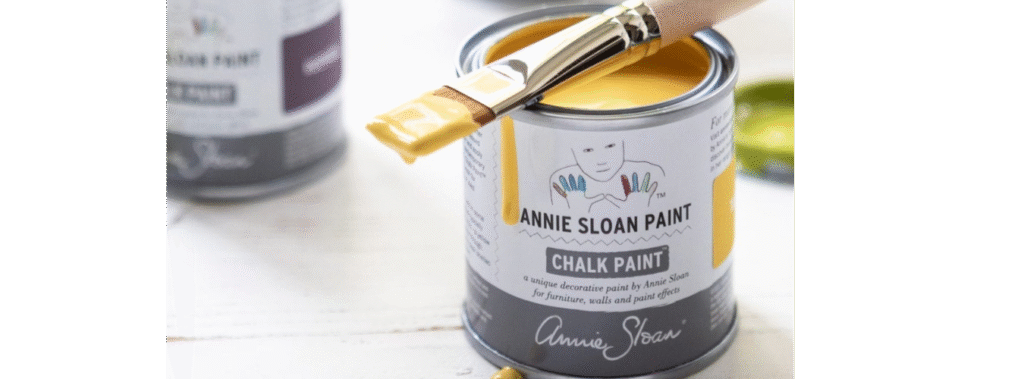
- Paint and primer: Premium self-leveling paints cost more upfront, but they save you hours of labor and prevent disastrous streaks.
- Hardware upgrades: Swapping dated pulls for modern matte black or brass handles instantly elevates a piece, but budget $15–$30 per furniture piece accordingly.
- Fuel and transport: Driving 45 minutes across town to pick up a $10 nightstand burns gas that eats straight into your profit.
Step 3: Follow a Repeatable System to Hit $500 Consistently
Consistency is what separates hobbyists who make a sporadic $50 once a summer from confident side-hustlers who pocket $500+ every single month.
To build momentum, streamline your workflow:
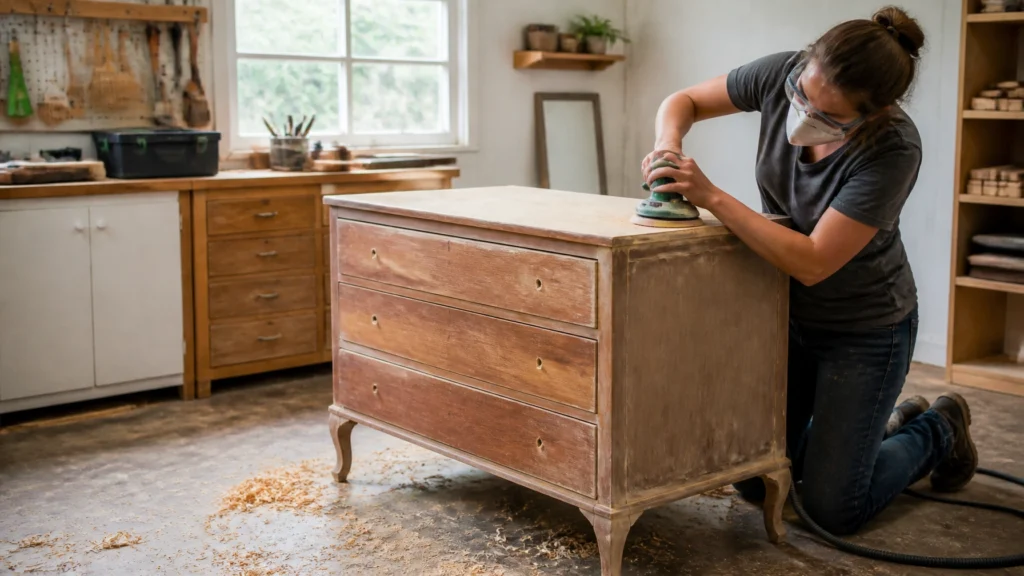
- Batch your prep work: Sand two small pieces at the same time so you aren't dragging out tools every single evening.
- Choose universal, high-demand finishes: Crisp warm whites, rich walnut stains, and earthy muted tones (sage greens and warm clays) sell exponentially faster than neon colors or distressed neon finishes.
- Master natural staging: Photograph your finished pieces in a well-lit room with simple greenery or minimalist decor. Clean, professional photos double your click-through rate on local listings.

By following a structured, repeatable framework, you eliminate second-guessing and shorten your turnaround time from weeks down to a single weekend.
Step 4: Track Every Dollar Like a Pro
If you want to know how to upcycle furniture and actually build a profitable side hustle, you have to treat your numbers seriously. Guessing your profit doesn't cut it.
Create a simple tracking habit for every single flip:
- Record the exact purchase date and cost.
- Log every drop of paint, new knob, and sheet of sandpaper used.
- Note your final sale price and the exact platform where it sold.

If tracking receipts and calculating margins sounds tedious, our digital Profit Planner is built specifically for creators and flippers. It takes the guesswork out of your accounting so you can instantly see which pieces yield the highest hourly return and adjust your strategy accordingly.
The Verdict: Is Furniture Flipping Worth Your Time?
Can you really make $500 a month flipping furniture? Yes.
It won’t happen overnight, and it does require physical effort, patience, and a willingness to learn basic woodworking and finishing skills. But if you enjoy creating beautiful things with your hands, want to decorate your home on a budget, and love the thrill of turning someone else’s discarded item into a stunning statement piece, this side hustle is one of the most rewarding paths available.
Ready to start your first profitable project? Equip yourself with practical, battle-tested guidance that cuts out the overwhelm. Explore our collection of beginner-friendly toolkits at The Crafty Renewal and start your flipping journey today!