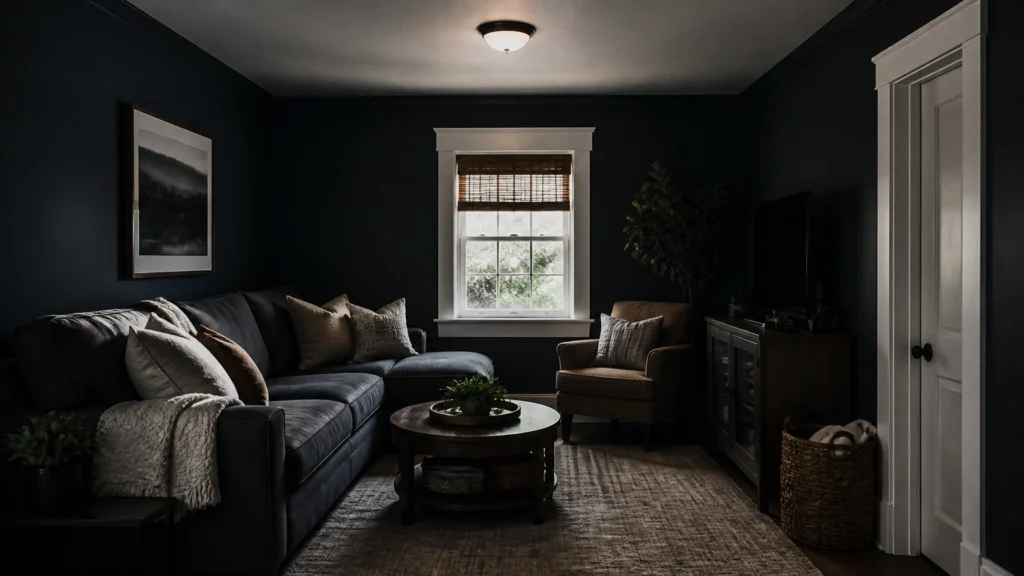
Dark paint can make a room feel smaller.
But it does not physically shrink the room. And it does not always make a space feel cramped.
Used carelessly, a dark color can absorb light, highlight clutter, and create a boxed-in feeling. Used strategically, it can make walls recede, add depth, and create a rich, cozy finish.
The same principle applies to furniture flipping. A dark-painted dresser, table, or cabinet can look heavy and dated: or polished and high-end. The difference comes down to preparation, contrast, lighting, and balance.
Let’s clear up four common color myths and turn them into practical steps you can use in your home or your next flip.
Myth 1: Dark Paint Always Makes a Room Look Smaller
The truth: Dark paint changes the feeling of a room, not its size
Dark colors absorb more light than pale colors. That matters in a small room with one tiny window or weak lighting. In that setting, deep navy, charcoal, or brown can make the walls feel closer.
But dark colors can also recede visually. When the walls blend with shadows and the surrounding decor, the edges of the room become less obvious. This can create more depth.
The result depends on how you use the color.
Dark paint is more likely to make a room feel smaller when you combine it with:
- Weak lighting that leaves corners in shadow.
- Heavy furniture in equally dark colors.
- Stark trim that outlines every wall and corner.
- A dark, low ceiling that presses the room downward.
- Too much clutter competing for attention.
- Glossy walls that create distracting glare.
Dark paint can work beautifully when you add:
- Lighter furniture or natural wood tones.
- Cream, beige, or soft white textiles.
- Mirrors and glass to reflect light.
- Layered lighting from lamps, sconces, and overhead fixtures.
- A lighter ceiling to preserve a sense of height.
- Controlled contrast instead of harsh black-and-white edges.

How to use dark paint without closing in a small space
Start by checking the natural light. Watch the room throughout the day, not just when you choose paint. A color that looks soft and dramatic in the afternoon may look almost black at night.
Then test a sample on more than one wall. Paint changes depending on the direction of the light and the surrounding colors.
Use these simple guidelines:
- Keep the ceiling lighter. A pale ceiling helps the room feel taller.
- Choose a matte or eggshell wall finish. These finishes soften glare and create a smoother visual background.
- Balance dark walls with lighter pieces. A cream rug or pale wood table can make a major difference.
- Add light at different heights. Use a ceiling light, table lamp, and floor lamp instead of relying on one bulb.
- Keep trim soft. Use a warm white or a lighter version of the wall color instead of an aggressive bright white.
- Reduce visual clutter. A dark room needs breathing space.
If you are nervous about painting every wall, start with one dark wall. The wall opposite the doorway can draw the eye forward and create a stronger sense of depth.
Myth 2: Light Colors Always Make Rooms Feel Bigger
The truth: Light colors can brighten a room, but they cannot solve every space problem
White and pale colors reflect more light. That is why they are often recommended for small rooms.
However, an all-white space can feel flat, cold, or unfinished. If the room has poor natural light, white walls may look gray. If the space is crowded, a pale wall will not make the furniture disappear.
Room size is influenced by more than wall color. Sightlines, furniture scale, lighting, and clutter all matter.
A small room painted pale can still feel tight when it contains:
- Oversized furniture.
- Busy patterns.
- Too many small accessories.
- Furniture placed directly in front of walkways.
- Heavy curtains that block natural light.
- Strong color changes between walls, trim, and ceiling.
The better goal is not “make everything light.” The goal is to create a calm, connected scheme.
Try a tonal palette instead. Use a soft warm neutral on the walls, a slightly lighter ceiling, and natural textures in the furniture and textiles. This creates brightness without making the room feel sterile.
You can also use one darker element for contrast. A deep green cabinet, navy console, or black-framed mirror can give the room structure.
Myth 3: The Ceiling Should Always Be Bright White
The truth: A light ceiling is a reliable choice, but it is not the only choice
A lighter ceiling usually helps a low room feel more open. That makes it a smart beginner-friendly option.
But matching the ceiling to the walls can sometimes make a room feel more unified. Instead of creating a hard line around the top of the room, the color flows from wall to ceiling. This can soften awkward angles and make the space feel intentional.
The key is choosing the right room.
A dark ceiling may work in:
- A cozy bedroom.
- A reading nook.
- A tall room with plenty of natural light.
- A home office where you want a cocooning feel.
- A room with architectural details you want to highlight.
A dark ceiling is riskier in:
- A small room with a low ceiling.
- A basement with limited lighting.
- A narrow hallway.
- A room with dark flooring and heavy furniture.
For a safe middle ground, use a lighter version of the wall color on the ceiling. This gives you a connected look without making the ceiling feel too low.
Myth 4: One Accent Wall Is Always the Best Way to Use a Dark Color
The truth: An accent wall can add depth, but it can also chop up the room
An accent wall is an easy way to experiment. It lets you bring in color without committing to a full room.
But placement matters.
If the accent wall is surrounded by bright white walls, the contrast can make the room’s boundaries more obvious. In some spaces, this makes the room feel shorter or more divided.
A dark color may work better on all four walls, especially if you use:
- A softer, muted shade.
- A lighter ceiling.
- Light furniture and textiles.
- Similar colors on doors and trim.
- Strong, layered lighting.
For a more traditional accent wall, choose the wall that naturally deserves attention. This might be the wall behind a bed, fireplace, sofa, or desk.
Avoid choosing an accent wall simply because it is the largest. Think about where you want the eye to land when someone enters the room.
What Dark Color Rules Mean for Furniture Flipping
Color does not only change rooms. It changes how furniture looks inside those rooms.
A dark finish can make a piece look substantial, expensive, and dramatic. It can also make a small table look bulky if the finish is too flat, the hardware is dull, or the styling lacks contrast.

Before you start painting, inspect the furniture and its surroundings.
Ask:
- Is the piece large or compact?
- Will it sit against a light or dark wall?
- Does it have interesting details worth highlighting?
- Is the wood grain attractive?
- Will the final piece need to feel modern, rustic, moody, or traditional?
- Are you selling it, or keeping it for your own home?
How to paint wood furniture in a dark color
Use this simple process for a cleaner, more professional result:
- Clean the piece thoroughly. Remove dirt, grease, polish, and residue.
- Repair obvious damage. Fill dents and tighten loose joints.
- Scuff-sand glossy surfaces. You do not always need to strip the entire piece, but the surface must be ready to accept primer or paint.
- Use the right primer when needed. This is especially important over slick finishes, knots, or red-toned wood that may bleed through.
- Apply thin coats. Two or three thin coats usually look better than one thick coat.
- Sand lightly between coats if necessary. This helps remove brush marks and creates a smoother finish.
- Protect high-use surfaces. Choose a durable topcoat compatible with your paint.
- Upgrade the contrast. Light hardware, natural wood, brass, woven textures, or pale decor can keep a dark piece from looking too heavy.

Do not automatically paint every surface the same color. Consider leaving a wood top natural, painting the inside of a cabinet a lighter shade, or adding contrast to drawer fronts.
Those small choices create dimension.
They also help a finished piece stand out in photos: an important advantage if you are building a furniture flipping side hustle.
Use Color to Create a Fabulous Before-and-After
The best DIY home decor projects solve a problem. They do not simply add paint.
If a room feels flat, use contrast. If a furniture piece feels dated, use a modern color and updated hardware. If a small cabinet looks too heavy, lighten the interior or pair it with brighter styling.
Before and after is not just about changing the color. It is about changing the visual weight.

For inspiration, compare the finish and styling of a dark-painted piece with lighter options in The Crafty Renewal shop, including this olive green end table. You can also study how smaller pieces, such as this distressed white side table, use contrast to feel lighter and more versatile.
The goal is not to follow rigid color rules. It is to understand what each color is doing.
A Simple Color Checklist Before You Paint
Use this checklist before committing to a dark wall or furniture finish:
- Light: Does the space receive enough natural and artificial light?
- Scale: Is the furniture appropriately sized for the room?
- Contrast: Will lighter elements balance the dark color?
- Ceiling: Should it stay light to preserve height?
- Finish: Will matte, satin, or semi-gloss create the right look?
- Function: Does the room need to feel energetic, calm, cozy, or dramatic?
- Style: Will the color support the rest of the decor?
- Photos: If you are selling the piece, will the finish photograph clearly?
Start small if you need to. Paint the back of a bookcase, a drawer interior, or a compact side table. Practice builds confidence quickly.
Dark paint is not the problem. Unplanned color is.
Use the right shade, prepare the surface, balance the darkness, and pay attention to lighting. You can create a room that feels layered instead of limited: and a furniture flip that looks intentional instead of overwhelming.
That is the real color rule: choose the finish that helps the space or piece do its job better.