If you’ve spent any time scrolling through Facebook Marketplace or wandering the aisles of big-box retailers lately, you’ve seen it: the rise of “fast furniture.” It’s cheap, it comes in a flat box, and it’s usually held together by a prayer and a few cam locks. But there is a quiet revolution happening. People are getting tired of furniture that falls apart during a single move or ends up in a landfill after two years.
This shift is known as the Anti-Fast Furniture Movement, and if you are running: or starting: a furniture flipping side hustle, it is the best news you’ve heard all year.
This movement isn’t just about being “eco-friendly” (though that’s a huge part of it). It is about a fundamental change in consumer behavior that is moving away from the disposable and toward the durable. For you, the flipper, this means better margins, higher demand, and a business model that actually lasts.
Here is why the anti-fast furniture movement is about to change everything for your side hustle.
The Death of the “Disposable” Era
We’ve all been there. You find a “bargain” dresser online, only to realize it’s made of thin particle board with a paper-thin veneer. One drop of water or a slightly heavy drawer, and the whole thing is ruined. According to the EPA, Americans throw away over 12 million tons of furniture every single year. Most of that is the “fast” stuff that simply wasn’t built to be repaired.
The Anti-Fast Furniture Movement is the consumer’s response to this waste. People are realizing that spending $200 on a desk every three years is more expensive: and more frustrating: than investing in a quality piece that lasts a lifetime.
As a furniture flipper, you are the bridge. You find those solid wood “relics” that have good bones but bad paint jobs and give them a second life. When you rescue a solid oak table or a mahogany chest of drawers, you aren’t just selling furniture; you are selling an alternative to the cycle of waste.
Higher Margins: Why Quality Beats Cheap Every Time
When you first start a side hustle, it’s tempting to grab anything that’s free or cheap. But flipping fast furniture (MDF and particle board) is a losing game. These pieces don’t take paint well, they warp easily, and you can’t sand them down because there’s no real wood underneath.
The Anti-Fast Furniture Movement encourages you to pivot toward high-quality, vintage, or antique pieces. Here is the math:
- Low Effort, Low Return: You buy a particle board nightstand for $10, spend $20 on paint, and 4 hours of labor. You sell it for $60. Your profit is $30, or $7.50 an hour.
- High Quality, High Return: You find a solid wood Olive Green End Table style piece at an estate sale for $40. You spend $30 on premium finishes and 6 hours of labor. Because it is solid wood and “one-of-a-kind,” you sell it for $250. Your profit is $180, or $30 an hour.
By focusing on quality over quantity, you work less and earn more. The market for cheap furniture is saturated. The market for high-quality, hand-refurbished, sustainable furniture is starving for more sellers.
Sustainability as Your Best Marketing Tool
In 2026, “sustainability” isn’t just a buzzword; it’s a requirement for many buyers. Gen Z and Millennials, in particular, are actively looking for ways to reduce their carbon footprint. When you market your side hustle, you shouldn’t just talk about the color of the paint. You should talk about the impact.
Every time you flip a piece, you are:
- Saving high-quality materials from a landfill.
- Reducing the demand for new, environmentally taxing manufacturing.
- Preserving craftsmanship that literally doesn’t exist in modern budget furniture.
Start including “Eco-Friendly,” “Sustainable Home,” and “Upcycled” in your listing descriptions. Tell the story of the piece. Was it a mid-century modern find that just needed the grime removed? Was it a farmhouse relic you transformed into a Distressed White Side Table? People don’t just buy a table; they buy the feeling of doing something good for the planet.
Sourcing Like a Pro in a Fast-Furniture World
To thrive in this movement, you have to change where and what you source. If you want to build a sustainable business model, you need to develop an eye for “The Good Stuff.”
What to Look For:
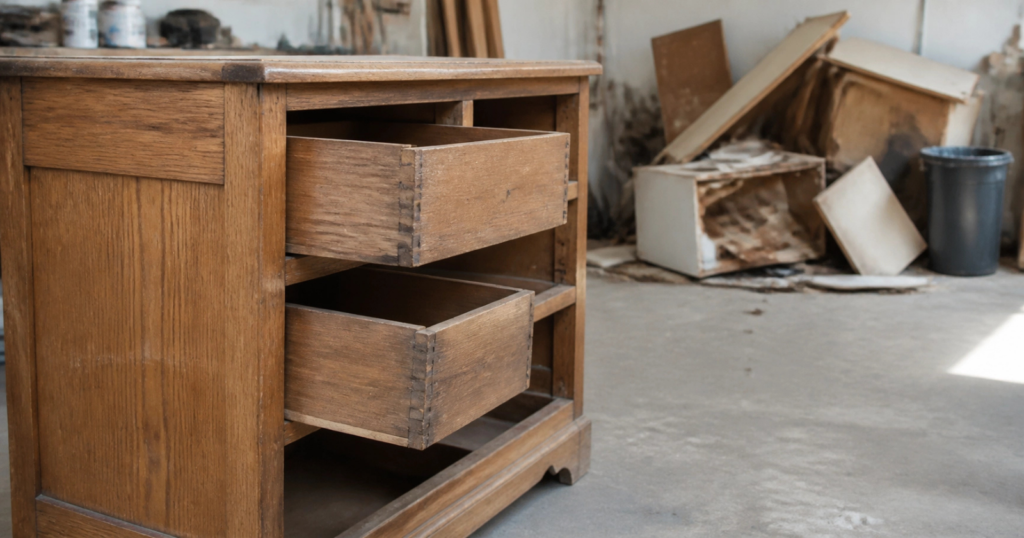
- Dovetail Joints: Check the sides of the drawers. If you see interlocking wedge-shaped joints, it’s a sign of quality construction.
- Weight: If you can lift a large dresser with one hand, it’s probably hollow or made of compressed sawdust. Real wood has heft.
- Backing Materials: Quality furniture usually has a wooden or plywood back, not a thin sheet of cardboard stapled on.
- Maker’s Marks: Look inside drawers or on the back for stamps from brands like Drexel, Ethan Allen, or Lane.
Where to Hunt:
Don’t just stick to the digital marketplaces. Estate sales are the gold mine of the anti-fast furniture movement. You’re looking for pieces from the eras when furniture was built to be passed down through generations. Often, these pieces just need a modern color or updated hardware to become a high-ticket item.
Building a “Boutique” Brand Instead of a “Garage” Business
The Anti-Fast Furniture Movement allows you to stop being “the person who sells used stuff” and start being a “boutique furniture curator.” This shift in mindset is what turns a hobby into a profitable business.
Beginners often make the mistake of trying to appeal to everyone by keeping prices as low as possible. But when you align with the movement toward quality, you should price accordingly. Your customers aren’t looking for the cheapest option; they are looking for the best option.
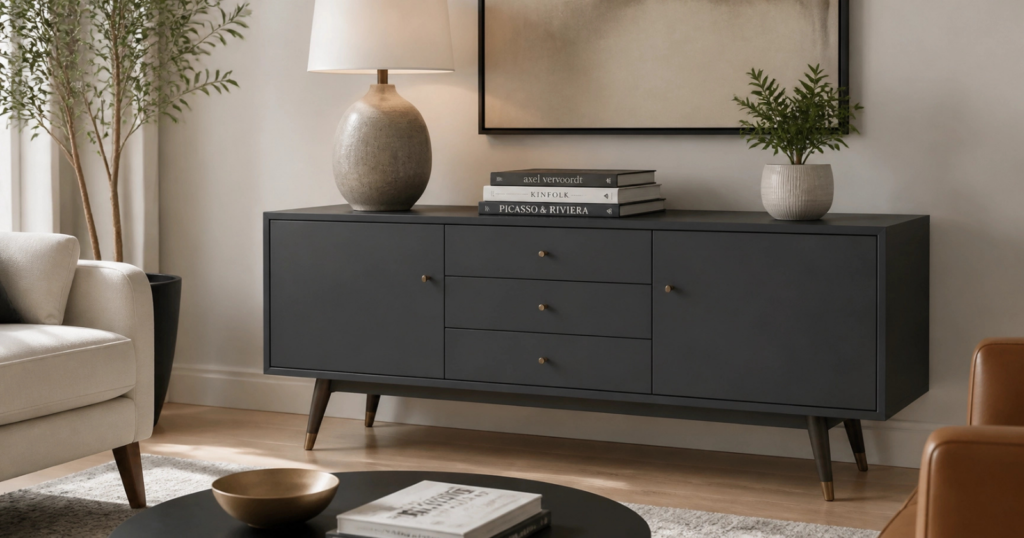
Think about your presentation. Instead of taking a photo of a piece in a dark garage, stage it. Add a Decorative Round Serving Tray or some Farmhouse Animals Wall Art to help the buyer visualize the piece in their own home. When you sell a lifestyle, not just a product, you can command those higher margins.
Scaling Your Side Hustle Sustainably
As your business grows, the Anti-Fast Furniture Movement offers ways to diversify. You don’t have to stop at large dressers and dining tables. You can expand into smaller, high-quality home accents that follow the same philosophy of “buy once, keep forever.”
Think about offering curated collections of smaller items, like a Blue Wooden Step Stool with Storage or unique Solid Black Iron Bookends. These smaller “add-on” items increase your average order value and help establish your brand as a one-stop shop for intentional, sustainable home décor.
Step-by-Step: How to Start Your Anti-Fast Furniture Flip
Ready to jump in? Here is your blueprint for a successful, sustainable first flip:
- Source the Bone: Find a solid wood piece at a thrift store or estate sale. Avoid anything with significant structural rot, but don’t be afraid of scratches or ugly old finishes.
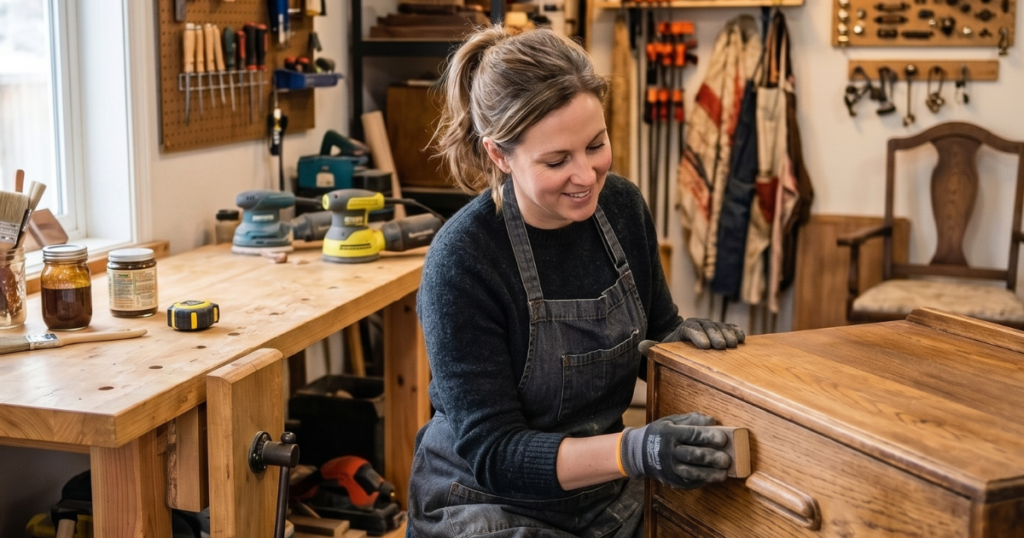
- Clean and Prep: This is the most important step. Use a good de-glosser or sand it down. You can’t build beauty on a foundation of dirt.
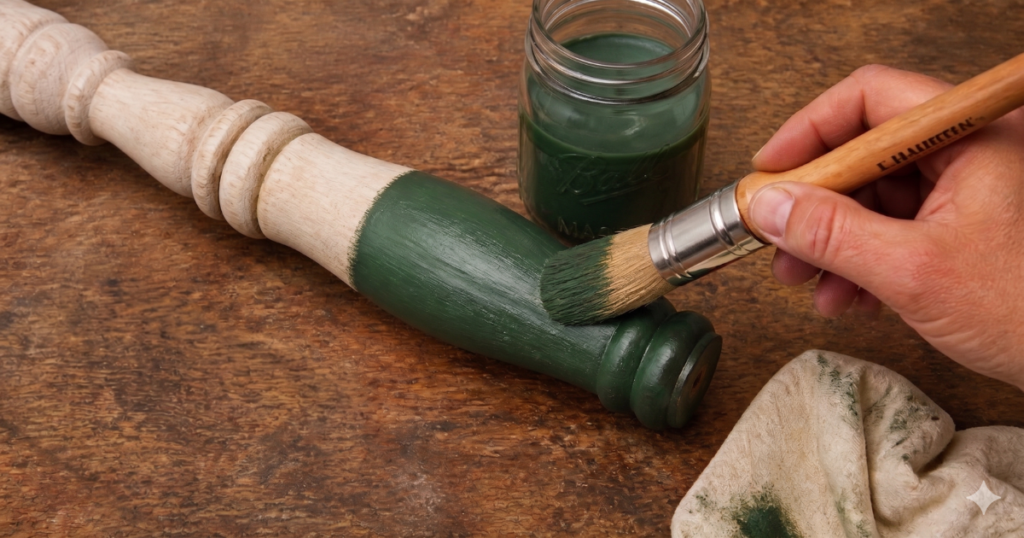
- Choose a Timeless Finish: While neon colors might be a trend, the anti-fast furniture crowd usually appreciates classic or “modern heirloom” looks. Deep greens, muted navys, or even a simple, high-quality wood stain work wonders.
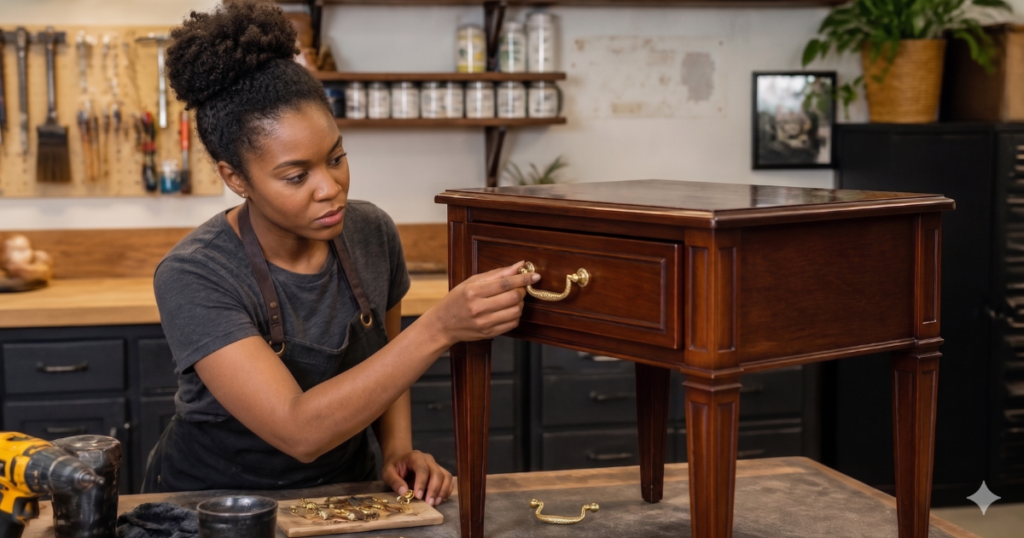
- Hardware Upgrade: Never underestimate the power of new knobs or pulls. It’s the “jewelry” of the furniture world.
- List with Intent: Highlight the solid wood construction and the fact that it’s a rescued piece. Mention how it’s built to last another 50 years.
Why This Matters for Beginners
If you are just starting out, the pressure to “go big” can be overwhelming. But the beauty of the Anti-Fast Furniture Movement is that it favors the small, meticulous creator. You don’t need a massive warehouse or a fleet of delivery trucks. You just need a discerning eye and a commitment to quality.
By focusing on repurposed furniture, you are entering a market that is inherently protected from the fluctuations of the economy. When new furniture prices skyrocket due to supply chain issues, your “locally sourced” vintage finds remain affordable and accessible.
Final Thoughts
The way we run our side hustles is changing because the way people live is changing. We are moving away from the “clutter” of cheap goods and toward the “soul” of well-made pieces.
As a flipper, you are more than just a painter. You are a conservator of quality. You are an entrepreneur who is helping people build homes they can be proud of: one solid wood drawer at a time.
If you’re looking for inspiration or the perfect finishing touches for your next project, check out our full shop for unique pieces and décor that celebrate the art of the renewal.
Your side hustle isn’t just about the extra cash; it’s about participating in a movement that values longevity over the “last-minute.” So, go find that discarded oak dresser, grab your sandpaper, and let’s change the world of furniture together.