If you’re new to furniture makeovers, you’ve probably seen the terms upcycling and refinishing used interchangeably. While they’re often grouped together, they are not the same thing and choosing the wrong approach can lead to unnecessary work or disappointing results.
Understanding the difference between upcycling vs refinishing helps you decide how far to take a project and what results to expect before you start.
What Is Furniture Upcycling?
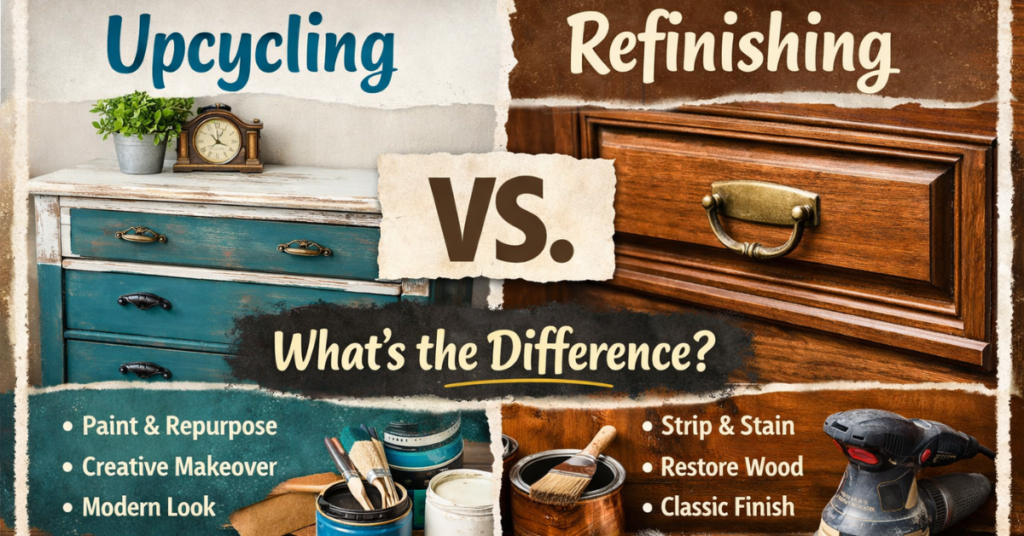
Upcycling furniture means changing the purpose, style, or appearance of a piece in a creative way. The goal isn’t to restore it to its original condition, but to give it a new life.
Common upcycling examples include:
- Painting a dated dresser in a modern color
- Turning an old cabinet into storage or shelving
- Adding new hardware, feet, or decorative details
Upcycling allows flexibility and creativity, making it popular with beginners.
What Is Furniture Refinishing?
Refinishing focuses on restoring furniture to a natural or near original state. This process usually involves removing old finishes to expose the wood beneath.
Refinishing often includes:
- Stripping old paint or stain
- Sanding down to bare wood
- Applying stain, oil, or clear finishes
The goal is to highlight the wood itself rather than change the piece’s identity.
Key Differences Between Upcycling and Refinishing
1. Level of Preparation Required
Upcycling typically requires less prep. Many projects only need cleaning, light sanding, and paint.
Refinishing requires extensive preparation, including stripping and deep sanding. It’s more time-consuming and physically demanding.
2. Skill Level
Upcycling is more forgiving. Small flaws can be hidden with paint or design choices.
Refinishing requires patience and precision. Mistakes are harder to hide once the wood is exposed.
3. Time and Cost
Upcycling is often faster and more budget friendly. Paint and basic tools are usually enough.
Refinishing can be costly due to:
Longer project timelines
Strippers and sanding materials
Specialized finishes
4. Type of Furniture That Works Best
Upcycling works well on:
- Furniture with cosmetic damage
- Veneer pieces
- Mixed materials
Refinishing works best on:
Furniture without major surface damage
Solid wood furniture
Pieces with good wood grain
Which Should You Choose?
Choose Upcycling If:
- The piece has veneer or damage
- You want a modern or custom look
- You’re a beginner
- Time and budget are limited
Upcycling allows creativity without perfection.
Choose Refinishing If:
- The furniture is solid wood
- You want to preserve the natural grain
- The piece is historically valuable or well made
- You enjoy detailed, hands-on work
Refinishing is ideal for quality furniture that deserves restoration.
Can a Piece Be Both Upcycled and Refinished?
Yes. Many projects combine elements of both. For example:
- Refinishing a tabletop while painting the base
- Preserving wood drawers while upcycling the frame
Blending techniques gives you the best of both worlds.
A Simple Decision Checklist
Ask yourself:
- Is the furniture solid wood or veneer?
- Do I want to highlight the wood or change the look entirely?
- How much time and effort am I willing to invest?
Your answers usually point clearly to one approach.
Final Thoughts
Upcycling and refinishing aren’t competing methods they’re tools. Knowing the difference helps you choose the right approach for each piece, avoid unnecessary work, and achieve better results.
When you understand upcycling vs refinishing, your projects become more intentional and far more successful.